Friday, February 27, 2015

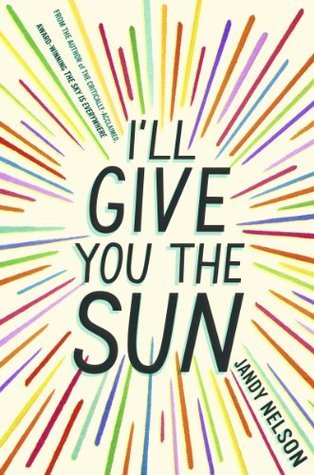
I'll Give You the Sun Review

I'll Give You the Sun 

Author: Jandy Nelson
Average Rating: 4.10/5.0
Personal Rating: 5.0/5.0
Page Count: 371
Finished Reading: February 
Published: 16th September 2014


According to Goodreads:

Jude and her twin brother, Noah, are incredibly close. At thirteen, isolated Noah draws constantly and is falling in love with the charismatic boy next door, while daredevil Jude cliff-dives and wears red-red lipstick and does the talking for both of them. But three years later, Jude and Noah are barely speaking. Something has happened to wreck the twins in different and dramatic ways . . . until Jude meets a cocky, broken, beautiful boy, as well as someone else—an even more unpredictable new force in her life. The early years are Noah's story to tell. The later years are Jude's. What the twins don't realize is that they each have only half the story, and if they could just find their way back to one another, they’d have a chance to remake their world.

My Opinion:

I'll Give You the Sun is my first Jandy Nelson novel, and I must say I am in love with her writing. When I first started reading her novel, I was a little apprehensive of her writing style. She uses a boatload of imagery to relay to the reader how the character reacted and what he or she was feeling. I quickly grew used to the style, and flew through the novel.

Jude and Noah are twins, and they have the ability to finish each other sentences , and know when something is wrong with the other. Jude acts like Noah's protector due to Noah's quietness and his strong interest in painting and drawing. He isn't athletic or outgoing like the other guys who Jude tends to associate with. Jude finds herself closer to her father, while Noah and their mother are attached to the hip. As the twins grow older, Jude finds herself longing for more attention from her mother. She becomes more rebellious and begins dressing scantily all for a reaction from her mother. Meanwhile, Jude and Noah's unbreakable relationship is falling apart. Then the inevitable happens. Jude begins questioning if she will ever be able to live the life she once lived before. 

The novel is split in chapters from Noah's perspective and Jude's perspective. Noah's perspective focuses on the time when he and Jude were 13 and 14, while Jude's focuses more on the present time when they are 16. I usually enjoy novels written in split perspective, but I felt that the chapters were too long. I found myself having trouble remembering what had happened the last time one of them spoke. 

I would highly recommend I'll Give You the Sun due to it's ability to portray one's guilt, and how it takes a lot of courage to own up to your mistakes. I feel like a lot of people will be able to connect to Jude, because we have all probably done something in order to gain the attention of someone. The novel also incorporates the theme of jealousy, and how it can lead us down the wrong path. I am definitely planning on reading The Sky is Everywhere, so if any of you have read the novel feel free to leave a comment with your thoughts!


Sunday, February 22, 2015

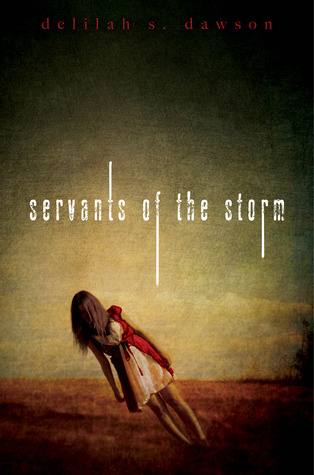
Servants of the Storm Review

Servants of the Storm

Author: Delilah S. Dawson
Average Rating: 3.76/5.0
Personal Rating: 5.0/5.0
Page Count: 384
Finished Reading: February
Published: 5th August 2014


According to Goodreads:

A year ago Hurricane Josephine swept through Savannah, Georgia, leaving behind nothing but death and destruction — and taking the life of Dovey's best friend, Carly. Since that night, Dovey has been in a medicated haze, numb to everything around her.

But recently she's started to believe she's seeing things that can't be real ... including Carly at their favorite cafe. Determined to learn the truth, Dovey stops taking her pills. And the world that opens up to her is unlike anything she could have imagined.

As Dovey slips deeper into the shadowy corners of Savannah — where the dark and horrifying secrets lurk — she learns that the storm that destroyed her city and stole her friend was much more than a force of nature. And now the sinister beings truly responsible are out to finish what they started.

Dovey's running out of time and torn between two paths. Will she trust her childhood friend Baker, who can't see the threatening darkness but promises to never give up on Dovey and Carly? Or will she plot with the sexy stranger, Isaac, who offers all the answers — for a price? Soon Dovey realizes that the danger closing in has little to do with Carly ... and everything to do with Dovey herself.
 

My opinion:

I absolutely loved this book. The novel starts out during hurricane Josephine, and then skips right to a year after the hurricane and the death of Carly. For the rest of the novel, the reader follows Dovey as she figures out what is really going on after the hurricane after she sees a glimpse of Carly...even though Carly is supposed to be dead. Say what? Along the way she meets Isaac, who is connected to the dark activities that have been happening since the hurricane. And yes, Isaac is swoon worthy so don't even bother to ask. 

I loved how Dawson incorporated New Orleans folklore, and some of the tourist-y activities of small towns like the ghost ride tours. I would definitely label the book paranormal with a stronger focus on zombie-like characteristics rather than ghosts. Dawson tied in the sharp increase in crime after a natural disaster by disguising the evilness as creatures that resemble demons and their slaves. She disguised theft, prostitution, and violence by giving them a character to portray the characteristics. 

I highly recommend Servants of the Storm. It's definitely not a romantic chic-flic that, let's just be honest with each other, can get a little old after a while. The novel incorporates paranormal aspects, and is narrated by a teenage girl who does not want to be messed with. Also, the ending is a complete twist. I can usually tell how a book will play out, but I NEVER saw the ending to this one. The shock sent my heart racing, and I found myself going no no no no no no no....you get the point? 

Monday, February 16, 2015

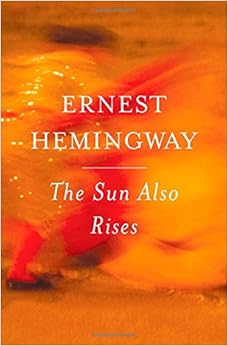
The Sun Also Rises Review

The Sun Also Rises

Author: Ernest Hemingway
Average Rating: 3.82/5.0
Personal Rating: 4.0/5.0
Page Count: 251
Finished Reading: February 
Published: 2006


According to Goodreads: 

The quintessential novel of the Lost Generation, The Sun Also Rises is one of Ernest Hemingway's masterpieces and a classic example of his spare but powerful writing style. 

A poignant look at the disillusionment and angst of the post-World War I generation, the novel introduces two of Hemingway's most unforgettable characters: Jake Barnes and Lady Brett Ashley. The story follows the flamboyant Brett and the hapless Jake as they journey from the wild nightlife of 1920s Paris to the brutal bullfighting rings of Spain with a motley group of expatriates. It is an age of moral bankruptcy, spiritual dissolution, unrealized love, and vanishing illusions. 

First published in 1926, The Sun Also Rises helped to establish Hemingway as one of the greatest writers of the twentieth century.

My opinion:

I am trying to integrate more classics into my reading schedule, because the classics make up the foundation that the books we love today are built upon. Yes, I know some classics are not the most exciting of things to read compared to the Divergent trilogy, but classics hold so much hidden meaning it's mind-blowing at times. I love those types of books where they make you work a bit to realize the meaning of the title or the meaning of a symbol. 

If you have not read any Hemingway before let me just tell you that he isn't an action packed writer. He focuses on more of the straightforward details whether than all the other frivolous detailing. There's quite a bit of dialogue in The Sun Also Rises, but it's right to the point. The pacing of the story did pick up when the dialogue spanned several pages, otherwise the pacing was pretty slow. 

My favorite part of the whole novel was when the bullfights began. Hemingway clearly had a passion for bullfighting or did his research, because Jake's, the narrator, passion had me all excited for the bullfights. Hemingway included terminology for the bullfights, and described the energy and festivities the fans created. The reader finally sees Jake come alive when he and his friends arrive at the bullfights. Before, the readers watched Jake mindlessly go from bar to bar wasting money and making small talk with those he considered friends. The bullfights brought out a passion of Jake's, and made him more relax now that he was not in the repetitious schedule of his daily life back at home. 

I would recommend The Sun Also Rises by Ernest Hemingway simply due to the fact that it is a classic. I think we all get boggled down with the new releases and books of today that we forget about those who set the foundation. Classics make you think a little bit harder due to hidden meanings interlaced throughout, but the satisfaction upon completing a classic is amazing. 


Wednesday, February 11, 2015

Trust Me, I'm Lying Review

Trust Me, I'm Lying

Author: Mary Elizabeth Summer
Average Rating: 3.67/5.0
Personal Rating: 4.0/5.0
Page Count: 336
Finished Reading: February 
Published: 14 October 2014


According to Goodreads:

Julep Dupree tells lies. A lot of them. She’s a con artist, a master of disguise, and a sophomore at Chicago’s swanky St. Agatha High, where her father, an old-school grifter with a weakness for the ponies, sends her to so she can learn to mingle with the upper crust. For extra spending money Julep doesn’t rely on her dad—she runs petty scams for her classmates while dodging the dean of students and maintaining an A+ (okay, A-) average.

But when she comes home one day to a ransacked apartment and her father gone, Julep’s carefully laid plans for an expenses-paid golden ticket to Yale start to unravel. Even with help from St. Agatha’s resident Prince Charming, Tyler Richland, and her loyal hacker sidekick, Sam, Julep struggles to trace her dad’s trail of clues through a maze of creepy stalkers, hit attempts, family secrets, and worse, the threat of foster care. With everything she has at stake, Julep’s in way over her head . . . but that’s not going to stop her from using every trick in the book to find her dad before his mark finds her. Because that would be
criminal.

My opinion:

Right off the bat I'm going to tell all of you that this novel isn't the greatest novels that involve spy like qualities. The book was riveting enough for me to keep turning the pages to find out what would happen next I'll give it that. So...why are you complaining?

I'm not exactly complaining. I would say I'm more irritated with the book, which kept me from giving it five stars. I absolutely LOVED the idea of Tyler, but the whole betrayal scene seemed flat to me. I felt like the author could have really dramatized or amp up the scene, but I felt zero emotion when the scene played out. Personally, I felt like there was a great opportunity missed to grab the reader's attention. (To counter this irritation, the scene almost right after this one still has my heart hurting). I also wasn't too fond of Julep, the main character, as the plot progresses. I know the author was trying to show the reader how much Julep was head over heals for Tyler, but in the process I thought that Julep's tough, confident demeanor was ruined. I couldn't take her seriously when she switched back to that demeanor. 

Those were the biggest irritations out of the novel. If that's all I have to be irritated about then I'd say that's a pretty good book we have on our hands right here. Julep's best friend, Sam, is the one constant thing that kept me reading the book. He's intelligent, protective, gentle, funny, sarcastic...need I go on? This novel is one book out of a trilogy, but I don't think I'll be reading the other ones anytime soon. Trust Me, I'm Lying didn't leave me with any unknown details or wanting more of something. I would recommend Trust Me, I'm Lying to any of you who are searching for young adult novels that involve the mob, spies, and undercover investigation type aspects.  


Wednesday, November 5, 2014

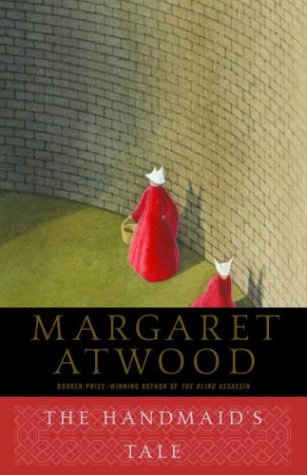
The Handmaid's Tale Review

The Handmaid's Tale

Author: Margaret Atwood
Average Rating: 3.98/5.0
Personal Rating: 4.0/5.0
Page Count: 311
Finished Reading: October 
Published: 16 March 1998


According to Goodreads:

Offred is a Handmaid in the Republic of Gilead. She may leave the home of the Commander and his wife once a day to walk to food markets whose signs are now pictures instead of words because women are no longer allowed to read. She must lie on her back once a month and pray that the Commander makes her pregnant, because in an age of declining births, Offred and the other Handmaids are valued only if their ovaries are viable. Offred can remember the years before, when she lived and made love with her husband, Luke; when she played with and protected her daughter; when she had a job, money of her own, and access to knowledge. But all of that is gone now.

My opinion:

My English teacher from sophomore year recommended that I read this novel, however I haven't had time to pick it up until this year. The only reason that I did pick it up was due to the fact it was a book I had to read for my English class this year. It's kind of intriguing how we have certain books that we do want to read, but push out of the way to make room for another book instead. BUT I digress. 

Atwood creates a dystopian world that is freakishly realistic. The book shows how people can strip others of power when everything is electronically transferred. Everyone in the book's society use cards that are similar to our credit cards. Paper cash has no value anymore. Every single woman's bank account has been frozen, and many are labeled "unfit" to be a mother anymore. Families are ripped apart, and suddenly women aren't allowed to have a job, access to money, read, and write. 

Throughout the novel, the reader is taken back through flashbacks of Offred. Through these flashbacks and the present accounts we are able to put two and two together about why and how the society has taken this turn. As we read, we watch as Offred becomes brainwashed and begins to accept her position in this new society of Gilead. 

Atwood alludes to the Old Testament quite a lot for the names of stores, towns, and people. She communicates the message that this society and time period could repeat itself in the future. That future may also be closer than we think as we become more dependent on technology and electronic transactions. I would recommend this book to everyone, because it isn't the typical teen lover dystopian that we have grown used to lately. It's raw, classic. 


Monday, September 1, 2014

How to Read Novels Like a Professor Review

How to  Read Novels Like a Professor

Author: Thomas C. Foster
Average Rating: 3.58/5.0
Personal Rating: 4.0/5.0
Page Count: 312
Finished Reading: August
Published: July 1st, 2008


According to Goodreads:

Of all the literary forms, the novel is arguably the most discussed . . . and fretted over. From Miguel de Cervantes's Don Quixote to the works of Jane Austen, F. Scott Fitzgerald, Ernest Hemingway, and today's masters, the novel has grown with and adapted to changing societies and technologies, mixing tradition and innovation in every age throughout history.

Thomas C. Foster—the sage and scholar who ingeniously led readers through the fascinating symbolic codes of great literature in his first book, How to Read Literature Like a Professor—now examines the grammar of the popular novel. Exploring how authors' choices about structure—point of view, narrative voice, first page, chapter construction, character emblems, and narrative (dis)continuity—create meaning and a special literary language, How to Read Novels Like a Professor shares the keys to this language with readers who want to get more insight, more understanding, and more pleasure from their reading.

My opinion:

I wouldn't normally have picked up this book, but alas it was one of my summer reading requirements. However, I can honestly say that I thoroughly enjoyed this book. 

The reader learns about the origin and history of the life of the novel. You also will learn about various things to look for in the novels you have read, are reading, and will read. Foster talks about the importance of the first page of a novel, the various different narrative perspectives a book can include, and much more. 

The main reason I enjoyed this book was due to Foster's enthusiasm about the novel. You can tell and picture his passion for writing, and all the components that go into writing a piece of work. He gives you a tip, and then shows several examples of how writers have used that tip in their own writing. The works he takes examples from can be from the oldest of classics to more modern ones. So in a sense, you are technically getting two things in one. First thing you are getting are the tips to better your comprehension while you read future novels. Second, you are getting more books to add to your TBR list, because you and I both know that our TBR lists are still not long enough. 

I would definitely recommend this to anyone who is searching for some help in better understanding the components that go into reading a novel. I found this novel to be quite helpful in that department. There are parts that tend to be on the drier side, but it's a book where I felt like I could personally connect with the author. 


Tuesday, August 19, 2014

The Bell Jar

The Bell Jar
Author: Sylvia Plath
Average Rating: 3.94/5.0
Personal Rating: 4.0/5.0
Page Count: 288
Finished Reading: August
Published: 1st Time: 1963/My copy: 2006


According to Goodreads:

A Special Paperback Edition to Commemorate the Fiftieth Anniversary of the Publication of Sylvia Plath's Remarkable Novel

Sylvia Plath's shocking, realistic, and intensely emotional novel about a woman falling into the grip of insanity

Esther Greenwood is brilliant, beautiful, enormously talented, and successful, but slowly going under—maybe for the last time. In her acclaimed and enduring masterwork, Sylvia Plath brilliantly draws the reader into Esther's breakdown with such intensity that her insanity becomes palpably real, even rational—as accessible an experience as going to the movies. A deep penetration into the darkest and most harrowing corners of the human psyche, The Bell Jar is an extraordinary accomplishment and a haunting American classic.

My Opinion:

I was pretty hesitant going into this book in the beginning. Two things prevented me from starting it way sooner:

1.      1. I had to read it for summer reading (let’s be honest with each other) who seriously wants to be forced to       read books? BUT. We must. Unfortunately. Otherwise, we will all fail those tests and papers that are          given on the first day of school that destroy our grade for the rest of the semester it seems like, because we    didn't read a book.
2.      2. All my friends who had already completed their summer reading kept saying how terrible and dreadfully       boring this novel was.

As you can see, I had my reasons that I felt allowed me to procrastinate.

Finally, about a week ago I picked The Bell Jar up around 3 A.M. As you can imagine I fell asleep about 15 minutes later. The whole next day I procrastinated till about 5 P.M. where I had to force myself to sit down in my desk, and read this novel. (At least try to…) Fast forward three hours, and you would see me fully emerged in the story.

It’s definitely not my favorite book of all time, but the concept is what enthralled me. We have this book that is written by a woman who has experienced all these things that the main character is experiencing. There’s not too many like this one out there today.

Side-note: Sylvia Plath was married to Ted Hughes, who became extremely jealous of all of her success as a writer. She suffered from depression, and eventually committed suicide. However, what made her writing be set apart from all the others at the time was her…uniqueness for a lack of a better word. During this time, nobody really knew how to deal with depression. You were locked up, and put out of mind. Obviously, our medical knowledge has come very far since then with new medication and such. Her writing showed her depression in a way that it made (and still does) readers pause, because it was so different from all the lovey-dovey murder mystery writings of the time. She showed people a different side of the human mind.

Anyway, we follow Esther through her journey of dealing with her depression. We see how people around her act. Her mother doesn't understand why Esther doesn't want to be just a secretary, but wants to be more than what a secretary requires. We see how the roles of men and females have changed since Esther’s time. We also get to see what a psychiatric hospital was like then.

The Bell Jar is a haunting and depressing novel, but believe it or not it’s a book that you should read. This novel puts you in the place of a young woman who is spiraling downwards in a world and a society that doesn't know how to handle it properly. It’s a raw book, but it gets you to think.